Verkline
Rear suspension set bundle - Toyota Supra A90 A91
25.130,00 zł
Price includes 23% VAT
SKU:
WAS-402

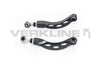
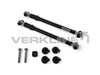
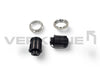
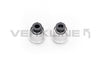
We've been wanting to develop a suspension kit for the new Supra A9x since the day it was available, but things really started happening when we watched this video: https://www.youtube.com/watch?v=XSH3RgGSmF0&t=288s
In the video above, Robert from Apex Nürburgring explains the Supra's bump control problem and the potential problems it causes. At the Nürburgring, where cars reach speeds of 270-280 km/h, the suspension operates at full travel. Robert daily drives the world's best cars, including the Ferrari 488 Pista, Porsche GT2RS, McLaren 620R, BMW M3, Toyota GT86, and many others. He knows how to drive, and we developed our kit in collaboration with Apex based on that.
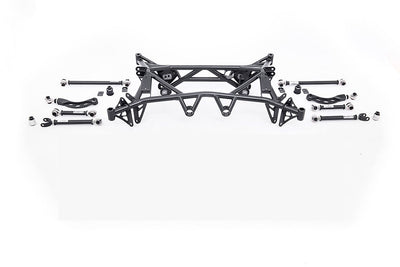
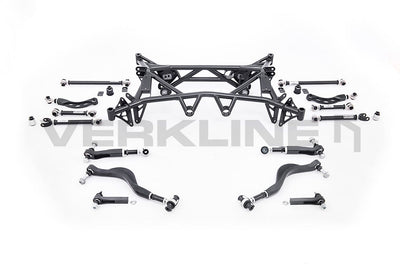
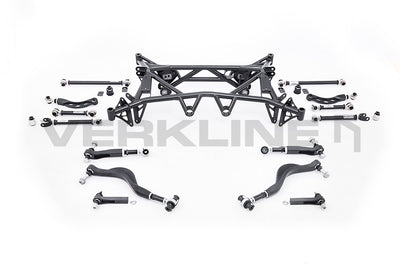
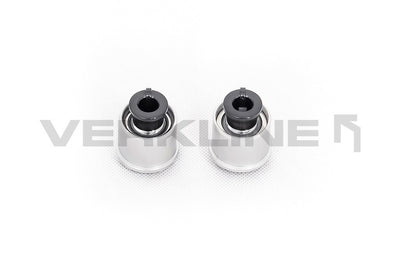
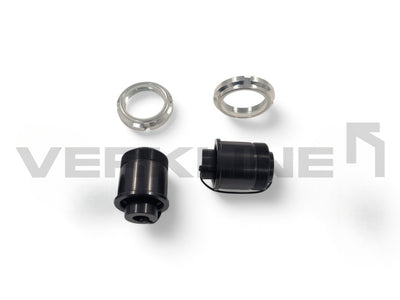
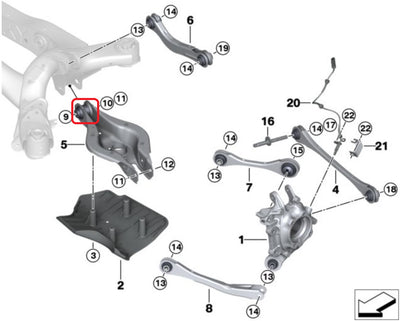
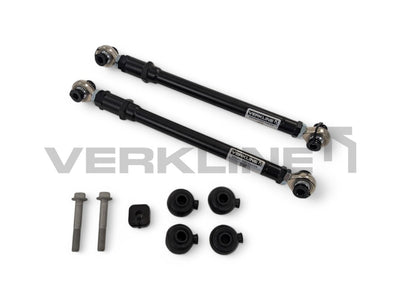
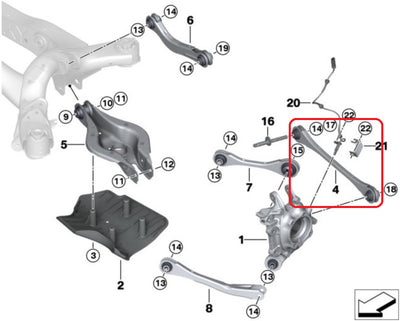
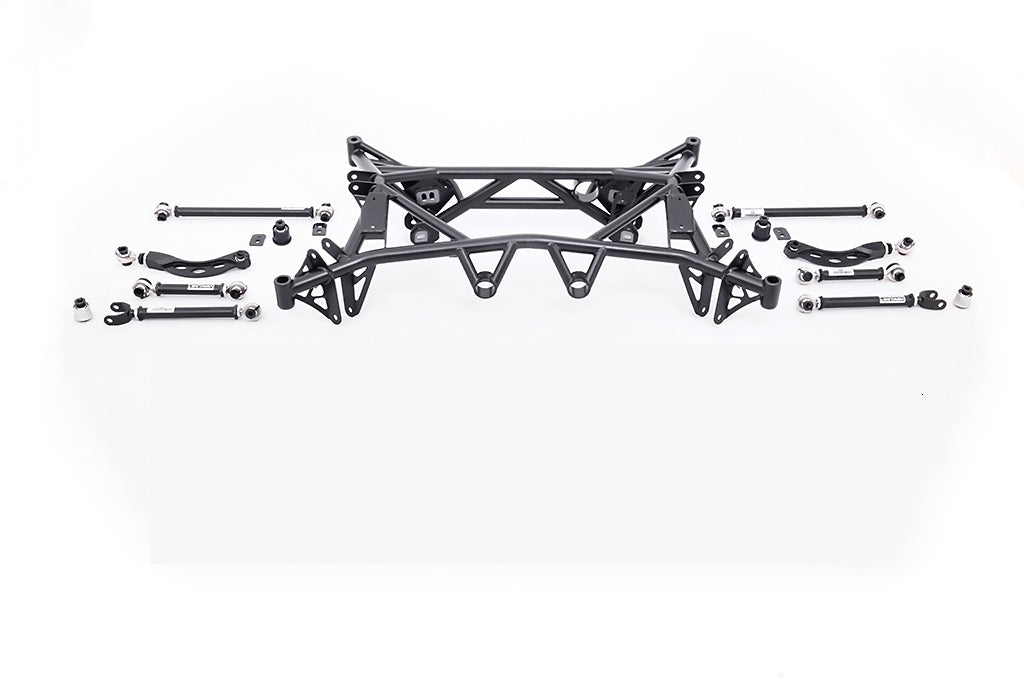
The full set includes (you can click on the item name below to view the full item description):
Rear adjustable cables for increased grip
Rear upper adjustable side straight links
Rear upper adjustable curved side links
Rear adjustable toe hooks with locking kit
Rear spring control arm bushings with locking kit
Rear steering knuckle bushings
47 printed pages of installation and suspension instructions
The Toyota Supra A9X and BMW Z4 G29 were originally designed to provide the best driving experience in normal street use, with the car reasonably loaded to its limits. Therefore, the factory-installed handling provides a pleasant ride that encourages the driver to have fun and occasionally steer a little to the side during daily driving. Problems begin to arise when we start looking for performance in this car, and this tail-happy behavior begins to cause issues with the car's instability.
The main cause is rear wheel sway. In simple terms, shock control tells us how the suspension toe changes during suspension travel. On a stock Supra, the steering angle is quite significant. For example, when adjusting the toe, you set the rear toe to 0.11° inward (black middle dot on the graph below). This uses standard camber values. Under hard acceleration, the rear of the vehicle drops down by about 40mm. Then, as a result of steering over bumps, the toe changes to about 0.3° (blue left dot on the graph below). On the other hand, under heavy braking, the rear suspension raises, again by about 40mm. This time, you get about -0.1° of toe (yellow right dot on the graph below).
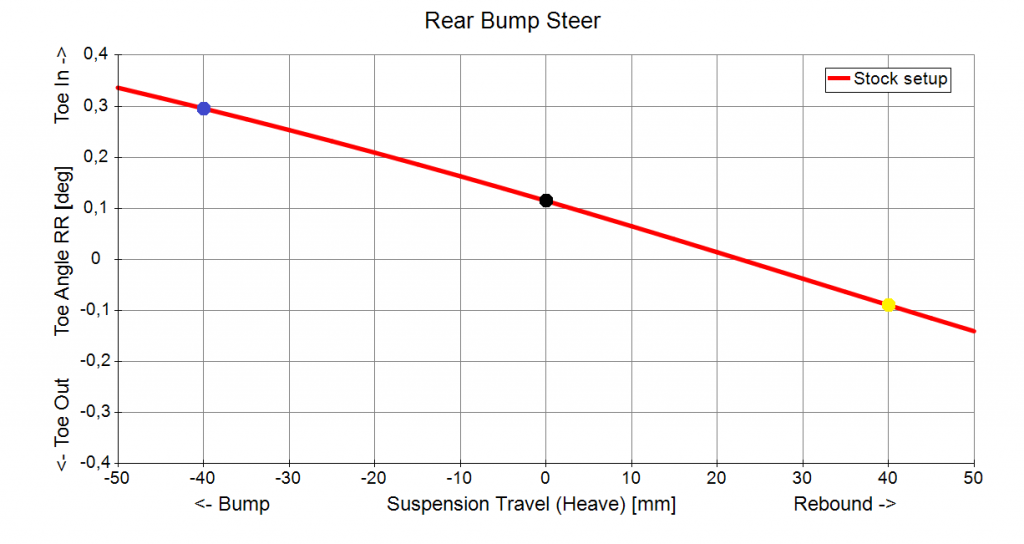
As you can see, the Supra/Z4's shock absorber has a significant impact on the steering feel. While adjusting the toe-in setting doesn't necessarily mean that, under certain, often unpredictable circumstances, you'll be driving with the rear wheels out of alignment, which can result in a very lively rear end. At everyday low speeds, this isn't too bad, but on the track or highways, it can make the car very unstable.
Another problem with this suspension (especially the 5-link) is that it has many interdependent properties. This makes it very difficult to modify its configuration without compromising its kinematics. The graph below shows how a 0.5° change in camber (new toe setting) can further improve handling (green line – increased camber by 0.5°, red line – standard camber setting).
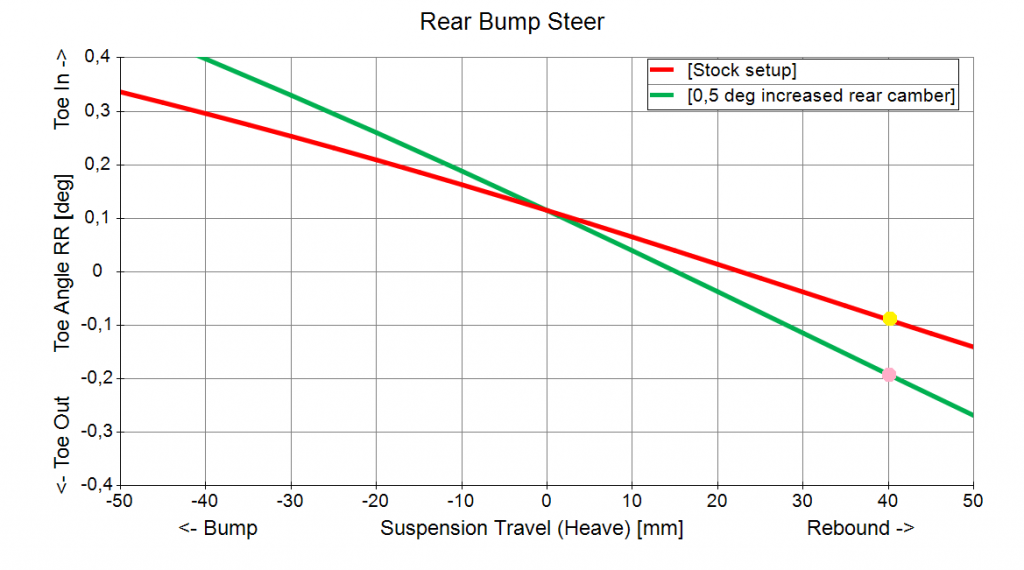
If we were to look again at the example of hard braking and a 40mm rear rebound, we would get about -0.2° of toe-in (pink dot in the graph above) instead of -0.1° for the stock setup (yellow dot in the graph above).
In some cases, such as when driving fast down a hill, the rebound can reach 80 mm, which in this case would mean as much as -0.5° of toe-in per wheel. That's -1° of total toe-out! Such a large change in toe-in creates a relatively high risk of losing traction and control of the car.
The above graphs are from suspension kinematics software, which uses suspension geometry derived from 3D scans of a real car as input. The simulation model was also validated by measuring the steering gain and camber of the real car. To do this, we placed the Supra on level stands, removed the suspension springs, and disconnected the anti-roll bars. After that, we moved the wheels up and down using a small car jack. We used string lines, a camber gauge, and a steel ruler for the measurements. The measurement accuracy was approximately 0.05 degrees for toe-in, 0.2 degrees for camber, and 1 mm for suspension travel. Our measurements demonstrated good correlation between the simulations and reality.
So, to prevent these issues, we've created three suspension presets (Track, Street, Drag) to ensure the best possible performance right out of the box for every type of driver. These three suspension setups, developed by us, consist of our basic setup and ride height suggestions and, most importantly, predefined control arm lengths to ensure the right kinematics for each vehicle's intended use.
In the graph below you can find a comparison of the two previously shown angled steering curves (red and green lines) with the curve of our initial Street configuration (yellow line).
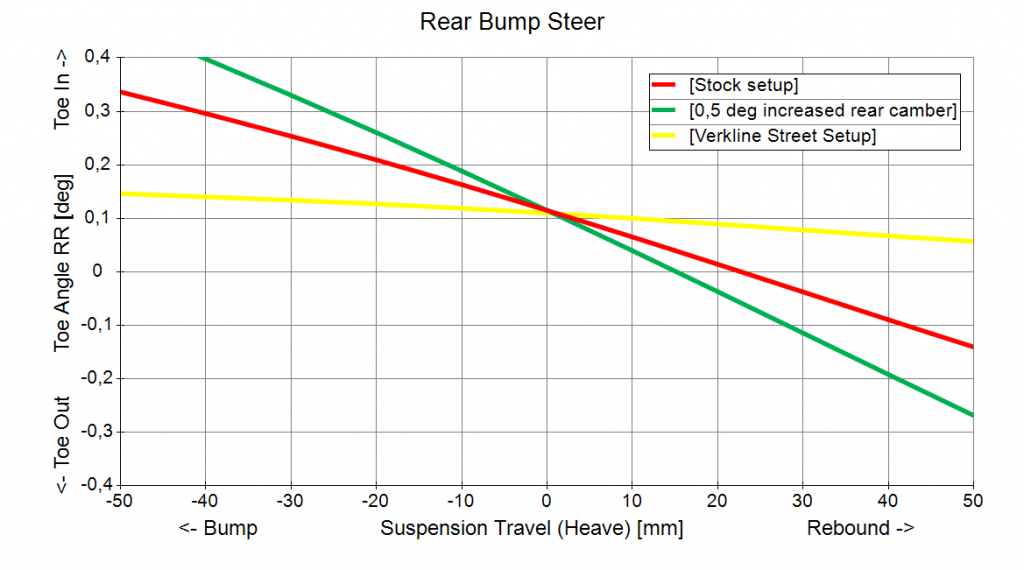
As you can see, the bump curve in our setup provides significantly reduced steering to prevent toe-in throughout the suspension travel. This ensures stable handling without the unpredictable, dangerous situations caused by sudden toe-off transitions.
In summary: VERKLINE's goal with these 3 pre-sets is to enhance the standard A9x/Z4 G29 Supra and, in addition, prevent any issues that might arise from modifications, such as camber or ride height, to tailor the car to its intended application. Our kits will include detailed instructions on how to configure the car using our control arms and rear subframe. This setup information can be found in the setup instructions included with the kit.
Used in:
– Toyota Supra A90
– Toyota Supra A91
–BMW Z4 G29
Note: Sold for off-road, track, and racing applications only. Installing these bushes may increase noise, vibration, and harshness (NVH) in your vehicle. We strongly recommend having the subframe installed by a qualified and experienced workshop.
In the video above, Robert from Apex Nürburgring explains the Supra's bump control problem and the potential problems it causes. At the Nürburgring, where cars reach speeds of 270-280 km/h, the suspension operates at full travel. Robert daily drives the world's best cars, including the Ferrari 488 Pista, Porsche GT2RS, McLaren 620R, BMW M3, Toyota GT86, and many others. He knows how to drive, and we developed our kit in collaboration with Apex based on that.
The full set includes (you can click on the item name below to view the full item description):
The Toyota Supra A9X and BMW Z4 G29 were originally designed to provide the best driving experience in normal street use, with the car reasonably loaded to its limits. Therefore, the factory-installed handling provides a pleasant ride that encourages the driver to have fun and occasionally steer a little to the side during daily driving. Problems begin to arise when we start looking for performance in this car, and this tail-happy behavior begins to cause issues with the car's instability.
The main cause is rear wheel sway. In simple terms, shock control tells us how the suspension toe changes during suspension travel. On a stock Supra, the steering angle is quite significant. For example, when adjusting the toe, you set the rear toe to 0.11° inward (black middle dot on the graph below). This uses standard camber values. Under hard acceleration, the rear of the vehicle drops down by about 40mm. Then, as a result of steering over bumps, the toe changes to about 0.3° (blue left dot on the graph below). On the other hand, under heavy braking, the rear suspension raises, again by about 40mm. This time, you get about -0.1° of toe (yellow right dot on the graph below).
As you can see, the Supra/Z4's shock absorber has a significant impact on the steering feel. While adjusting the toe-in setting doesn't necessarily mean that, under certain, often unpredictable circumstances, you'll be driving with the rear wheels out of alignment, which can result in a very lively rear end. At everyday low speeds, this isn't too bad, but on the track or highways, it can make the car very unstable.
Another problem with this suspension (especially the 5-link) is that it has many interdependent properties. This makes it very difficult to modify its configuration without compromising its kinematics. The graph below shows how a 0.5° change in camber (new toe setting) can further improve handling (green line – increased camber by 0.5°, red line – standard camber setting).
If we were to look again at the example of hard braking and a 40mm rear rebound, we would get about -0.2° of toe-in (pink dot in the graph above) instead of -0.1° for the stock setup (yellow dot in the graph above).
In some cases, such as when driving fast down a hill, the rebound can reach 80 mm, which in this case would mean as much as -0.5° of toe-in per wheel. That's -1° of total toe-out! Such a large change in toe-in creates a relatively high risk of losing traction and control of the car.
The above graphs are from suspension kinematics software, which uses suspension geometry derived from 3D scans of a real car as input. The simulation model was also validated by measuring the steering gain and camber of the real car. To do this, we placed the Supra on level stands, removed the suspension springs, and disconnected the anti-roll bars. After that, we moved the wheels up and down using a small car jack. We used string lines, a camber gauge, and a steel ruler for the measurements. The measurement accuracy was approximately 0.05 degrees for toe-in, 0.2 degrees for camber, and 1 mm for suspension travel. Our measurements demonstrated good correlation between the simulations and reality.
So, to prevent these issues, we've created three suspension presets (Track, Street, Drag) to ensure the best possible performance right out of the box for every type of driver. These three suspension setups, developed by us, consist of our basic setup and ride height suggestions and, most importantly, predefined control arm lengths to ensure the right kinematics for each vehicle's intended use.
In the graph below you can find a comparison of the two previously shown angled steering curves (red and green lines) with the curve of our initial Street configuration (yellow line).
As you can see, the bump curve in our setup provides significantly reduced steering to prevent toe-in throughout the suspension travel. This ensures stable handling without the unpredictable, dangerous situations caused by sudden toe-off transitions.
In summary: VERKLINE's goal with these 3 pre-sets is to enhance the standard A9x/Z4 G29 Supra and, in addition, prevent any issues that might arise from modifications, such as camber or ride height, to tailor the car to its intended application. Our kits will include detailed instructions on how to configure the car using our control arms and rear subframe. This setup information can be found in the setup instructions included with the kit.
Used in:
– Toyota Supra A90
– Toyota Supra A91
–BMW Z4 G29
Note: Sold for off-road, track, and racing applications only. Installing these bushes may increase noise, vibration, and harshness (NVH) in your vehicle. We strongly recommend having the subframe installed by a qualified and experienced workshop.
Weight
45.0 kg
SKU
WAS-402
CNC precision
Milled from solid 7075-T6 aluminum
2-year warranty
Full manufacturer's warranty
Shipping within 24 hours
Express shipping from warehouse
Made in Poland
Designed and manufactured in Poland