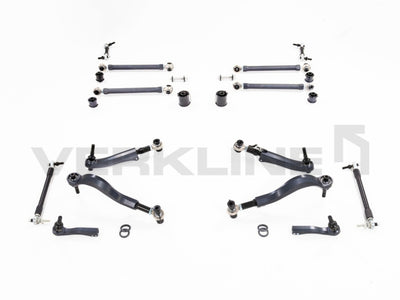
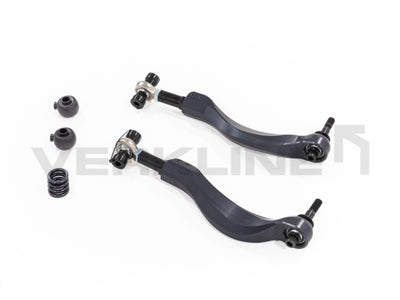
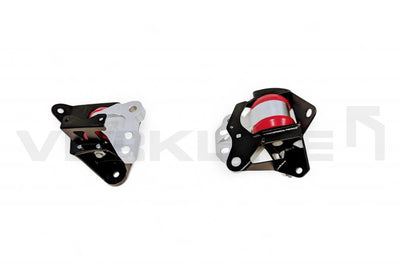
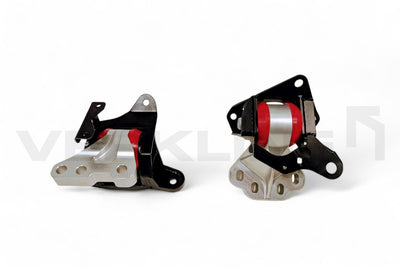
VERKLINE WAS-625 Rear adjustable lower long arm - Toyota GR Yaris/Corolla - product gallery
Rear adjustable lower long arm - Toyota GR Yaris/Corolla
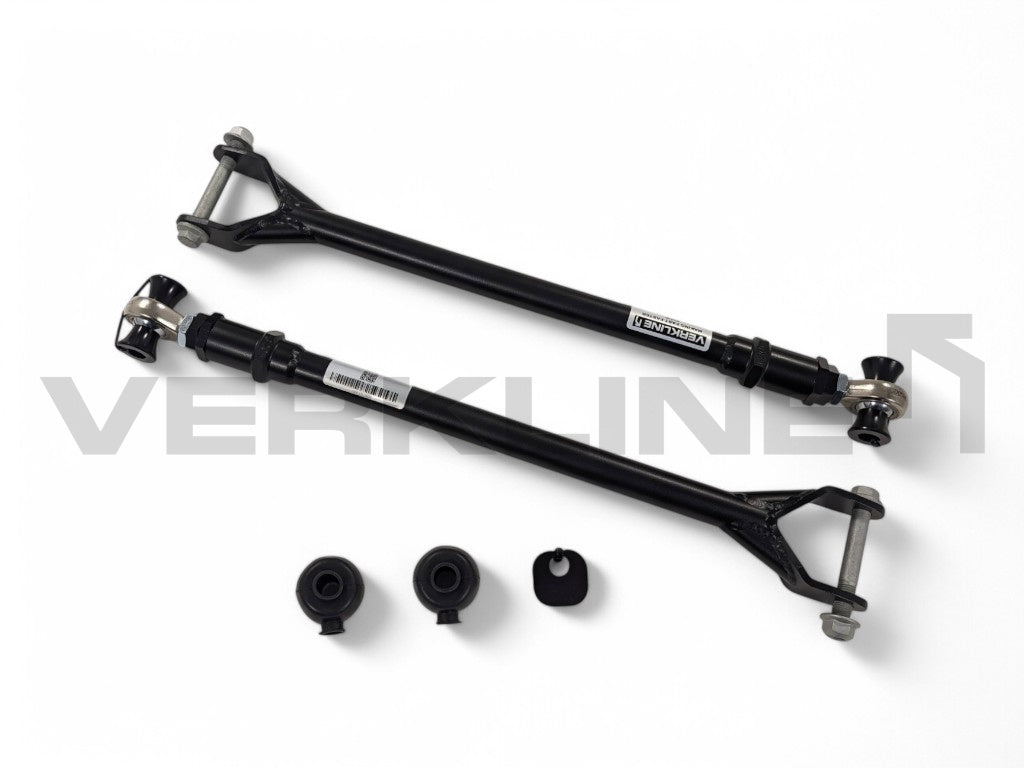
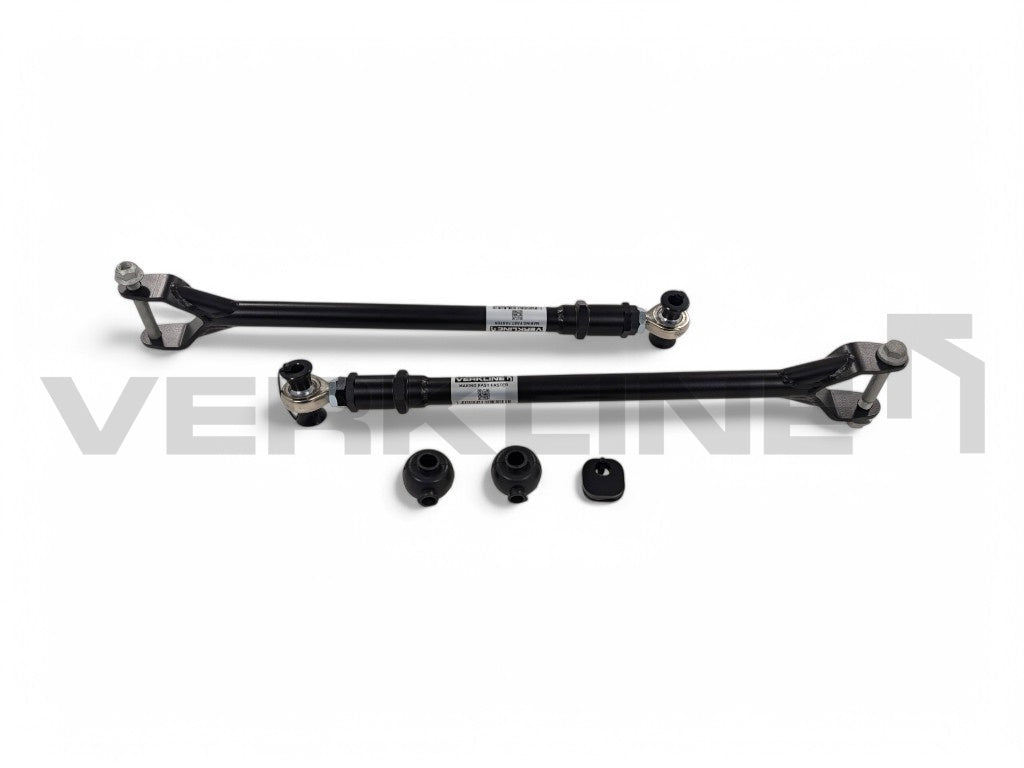
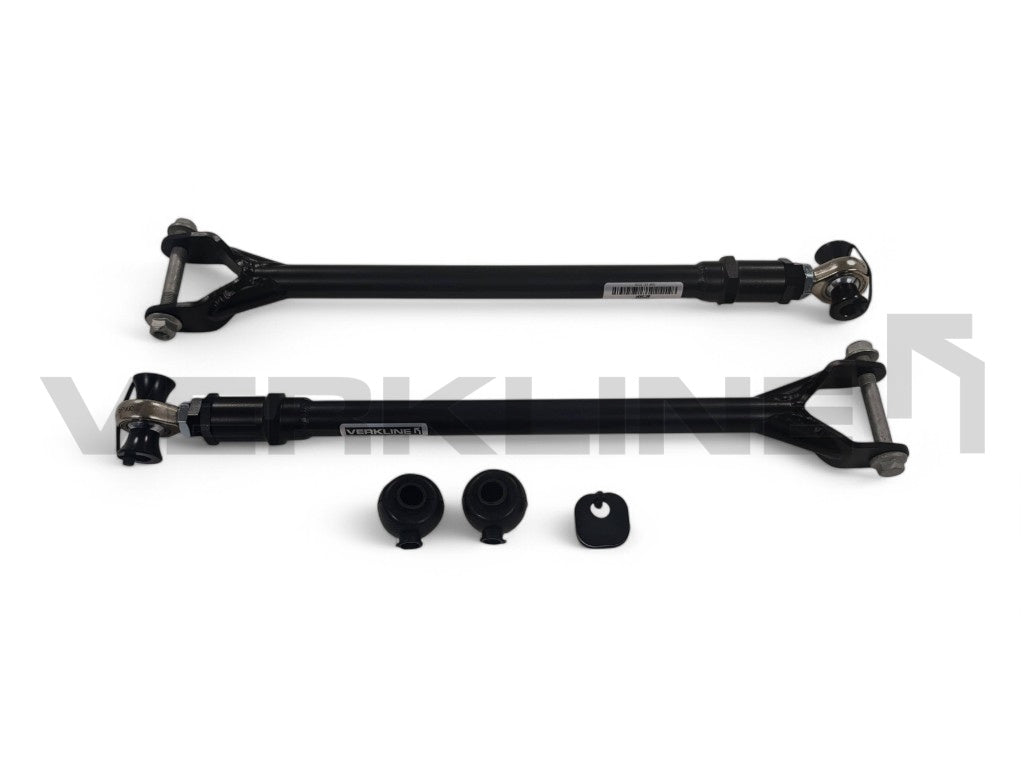
Rear Adjustable Lower Long Arm - Toyota GR Yaris / Corolla
WAS-625
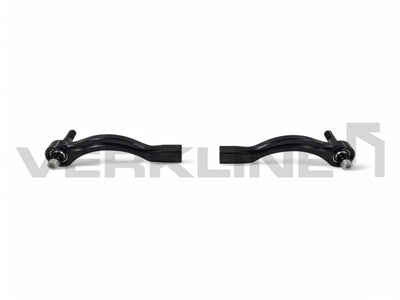
Tubular steel rear toe arm with double turnbuckle adjustment and PTFE-lined motorsport uniballs. Sold as a pair. Replaces the OEM stamped steel arm - cutting 54% of unsprung mass while adding on-car toe adjustability that the factory part does not have. Validated for loads exceeding 8.1 kN in tension with a buckling safety factor of 8.5x.
THE GR YARIS PROBLEM - WHY THE OEM REAR TOE ARM LIMITS YOUR SETUP
TOE ADJUSTMENT
Fixed length - no adjustment
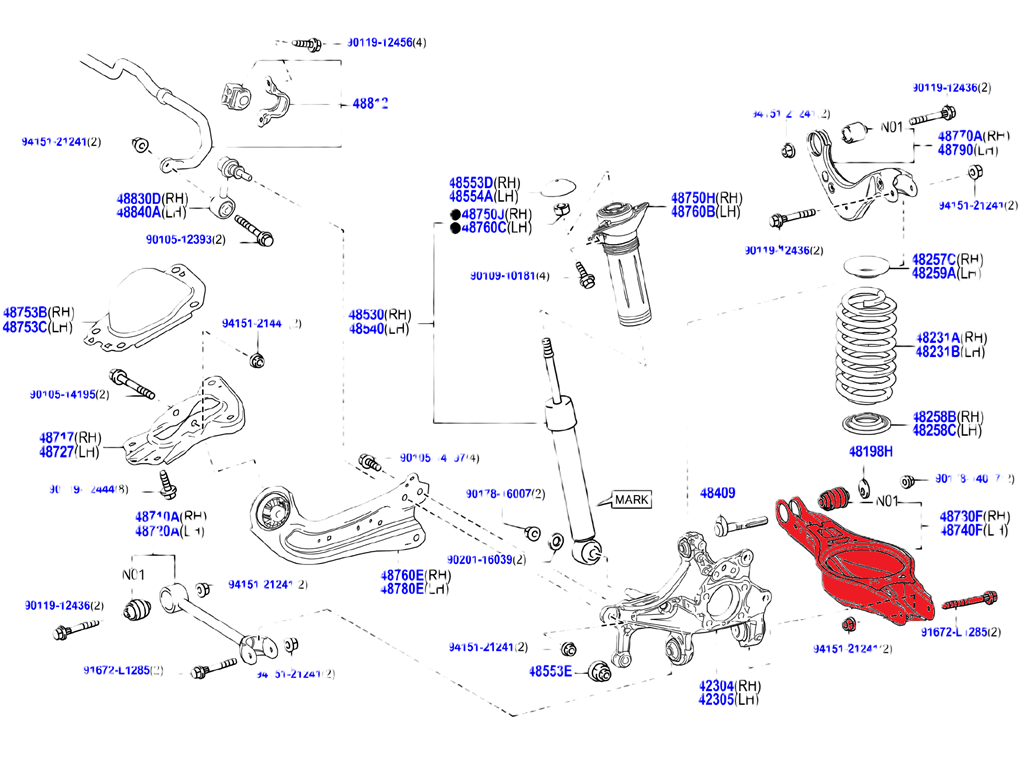
The OEM rear lower long arm has a fixed length. Rear toe is set only by the eccentric bolt in the subframe slot - a coarse adjustment with limited range that cannot be fine-tuned on track. Once you run aftermarket coilovers or change ride height, you need precise toe control that the OEM arm simply cannot provide.
BUSHING DEFLECTION
Your alignment is fiction under load
The OEM arm uses rubber bushings at both ends. You set your rear toe precisely on the alignment rack in the workshop - but that number becomes meaningless the moment the car is on track. Under cornering loads, the rubber deflects and the rear wheel toes out unpredictably. The geometry you paid to have set up is not the geometry you are actually driving on. Every corner entry, every braking zone - the rear suspension is working with different toe angles than what you specified. The harder you push, the bigger the difference between what you set and what you actually have.
UNSPRUNG MASS
2830 g per arm - stamped steel
The OEM arm weighs 2830 grams. That is unsprung mass hanging off the rear axle - mass that the suspension has to accelerate and decelerate with every bump, every curb, every surface change. Reducing unsprung mass improves how quickly the tire can follow the road surface. The effect is most noticeable on rough tarmac stages and bumpy circuits where tire contact patch consistency determines grip.
FORCE TRANSFER
Rubber delays every input
Every force that passes through the rear suspension - braking, acceleration, cornering - must travel through the rubber bushings before it reaches the wheel. Rubber compresses first, absorbs energy, and only after it deforms to its limit does the force fully transfer. The result is a measurable delay between driver input and wheel response. In drag racing this means lost time from the moment power is applied to the moment the rear wheels actually begin to push. On circuit, it means the rear axle reacts slower than the front - making the car feel disconnected and unpredictable on turn-in. A rigid uniball connection eliminates this delay entirely.
The WAS-625 replaces the entire OEM arm with a tubular steel structure, PTFE motorsport uniballs, and a double turnbuckle adjuster - giving you repeatable toe control that holds under load.
Why WAS-625
The OEM stamped steel arm weighs 2830 grams per side. The WAS-625 weighs approximately 1300 grams - saving over 1.5 kg per arm and more than 3 kg per axle. This is unsprung mass directly at the wheel. The arm is built from T45 high-strength steel tubing (25.4 x 1.5 mm) - the same specification used in roll cage construction. Welded, black powder-coated for corrosion resistance, and structurally validated against a buckling critical force of 59.1 kN (safety factor 8.5x against the maximum 6.91 kN compression load).
The WAS-625 uses a double turnbuckle adjuster that allows precise toe angle changes without removing the arm from the car. Loosen the thin nuts, turn the adjuster, retighten - done. This matters on track days and rally stages where you want to fine-tune rear toe between sessions without lifting the car for a full alignment. The OEM eccentric bolt offers only coarse adjustment with very limited range - and it cannot be changed quickly.
Both ends of the arm use PTFE-lined M16x1.5 motorsport spherical bearings instead of rubber bushings. PTFE bearings are maintenance-free - no grease, no oil, no WD-40. They provide zero compliance under load: the toe angle you set on the alignment rack is the toe angle you get on track. Competitors using pillow balls require periodic lubrication and offer less articulation. Competitors using rubber or polyurethane introduce the same deflection problem the OEM arm has.
The WAS-625 ships with a lockout kit that mechanically fills the OEM adjustment slot in the subframe. The arm bolt is locked into position - it cannot shift under load. No competitor in this segment includes this. Without a lockout, any adjustable toe arm still relies on the eccentric bolt friction to hold position in the slot. The lockout kit works with both OEM subframes and the VERKLINE tubular subframe (WAS-602), including gravel-spec lower pickup points (flip orientation as shown in fitting instructions).

What Is Included
The WAS-625 ships as a complete pair with all hardware, lockout kits, and an installation guide. No reuse of OEM components except the subframe eccentric bolt (48409-47011) which is retained by design.
BEARING TYPE: VERKLINE vs. COMPETITORS
Package Contents (per pair - both sides)
• 2x Welded toe arm (WAS-625-A1-A, T45 tubular steel, powder-coated)
• 4x Subframe uniball spacer (WAS-623-02-A)
• 2x Turnbuckle adjuster (WAS-048-04-D, double adjuster)
• 4x Lockout kit (WAS-622-04-B)
• 2x Thin nut M24x1.5 (NORM-09-A, 80 Nm)
• 2x Uniball M16x1.5 LH (PTFE-lined, maintenance-free)
• 2x Thin nut M16x1.5 LH (80 Nm)
• 2x Bolt M12x1.5x90 (upright side, 100 Nm)
• 2x Nut M12x1.5-10 (DIN 6927, 100 Nm)
• 2x Uniball dust cover (RERS03)
• 1x Printed installation guide (6 pages)

Vehicle Compatibility
• Toyota GR Yaris (GXPA16): 2020+ (pre-facelift and facelift)
• Toyota GR Corolla
• Requires aftermarket true coilover system
• Compatible with OEM subframe
• Compatible with VERKLINE subframe (WAS-602)
• Compatible with OEM and VERKLINE rear uprights
• Suppresses OEM: 48730-33160, 91672-L1285, 94151-21241
Engineering Approach
The WAS-625 was designed around a single tube concept - T45 high-strength steel tubing at 25.4 x 1.5 mm running the full 532 mm length of the arm. T45 is a chromium-molybdenum specification used in motorsport roll cage construction, chosen here for its strength-to-weight ratio. At the maximum compressive load of 6910 N, the critical buckling force of this tube is 59.1 kN - giving a safety factor of 8.5x. In tension, the arm handles 8160 N.
The double turnbuckle adjuster is positioned at the subframe end of the arm to maximize accessibility. This keeps the adjustment mechanism in the area with the most clearance - if access proves difficult in certain setups, the adjuster can be repositioned between the fork and the tube without changing the arm geometry. The fork end at the upright uses a dedicated longer bolt (M12x1.5x90) supplied in the kit, because the OEM bolt thread engagement with the thicker fork was verified to be insufficient at OEM length.
The lockout kit fills the OEM eccentric adjustment slot in the subframe, converting it from a friction-dependent adjustment point to a mechanically locked connection. This is critical - without it, any toe arm (OEM or aftermarket) is relying on bolt clamping friction alone to resist lateral loads that can exceed 8 kN. The lockout works in both standard and gravel orientations on the VERKLINE WAS-602 subframe by flipping the kit orientation.
Technical FAQ
Will I notice more noise inside the car?
Yes - spherical bearings transmit more road noise than rubber bushings.
The PTFE-lined uniballs replace compliant rubber bushings with a rigid metal-to-metal connection. Road surface noise and small impacts will be more noticeable in the cabin. This is the direct trade-off for zero-deflection toe control. On a car already running aftermarket coilovers (which the WAS-625 requires), the NVH increase from the arms is modest compared to what the coilovers already transmit. Most drivers running this setup are building a track or rally car where cabin refinement is not the priority.
Why uniballs instead of pillow balls like Hardrace or Cusco?
PTFE-lined uniballs are maintenance-free and have higher misalignment capacity.
Standard pillow balls (used by Hardrace, Cusco, ZSS) require periodic lubrication and have limited angular misalignment before binding. PTFE-lined bearings need no grease, no oil, and no WD-40 - the PTFE liner is the bearing surface. They handle greater misalignment angles, which matters when suspension geometry changes through travel. Do not apply any lubricant to the PTFE bearings - it will disturb their performance and reduce their service life.
Can I use this with OEM suspension?
No. This product requires a true coilover system.
The OEM GR Yaris rear suspension mounts the spring on the lower arm itself. The WAS-625 is a tubular arm - it cannot carry a spring. You must have an aftermarket coilover system where the spring is mounted on the shock absorber (a true coilover). This applies to both GR Yaris and GR Corolla. If your car still runs the factory spring-on-arm setup, this product is not compatible.
How does the double adjuster work?
A turnbuckle mechanism that changes arm length without removal.
The double adjuster sits between the main tube and the subframe end. To adjust toe: loosen the two thin nuts (M24x1.5 and M16x1.5), rotate the turnbuckle to lengthen or shorten the arm, then retighten both nuts to 80 Nm. The arm stays on the car throughout. Make sure the thread extension does not exceed 23 mm for the rod ends and 22 mm for the adjuster. After any adjustment, re-verify alignment and re-mark all fasteners with a paint marker.
What does the lockout kit do exactly?
It mechanically locks the subframe bolt position so it cannot shift under load.
The OEM subframe has a slot for the rear arm mounting bolt, with an eccentric washer for coarse toe adjustment. Once you have a turnbuckle-adjustable arm, you no longer need the slot - but the slot is still there, and under high lateral loads the bolt can migrate within it. The lockout kit places plates under the bolt head and nut that fill the slot, preventing any movement. This ensures your toe setting is determined solely by the arm length, not by whether the subframe bolt has shifted. No competitor includes this in the package.
Is professional installation required?
Yes - this is a safety-critical suspension component.
Installation must be done by a professional lift shop or certified mechanic. A second person is recommended for safety. You need a torque wrench (thin nuts 80 Nm, upright bolt 100 Nm), Loctite 243 (Blue) for specified connections, and a paint marker to mark all torqued fasteners. Before the first drive, run the suspension through full travel with the spring removed and ARB disconnected to verify there are no contact issues. Recheck all fasteners after the first 100 km. A detailed 6-page installation guide is included.
How often should I inspect the arms?
Professional inspection twice a year. Full detail check annually.
VERKLINE requires a professional inspection at least twice per year (every 5-7 months) covering bolt tightening, uniball play, and visual signs of wear. After every motorsport event or track day, check all paint-marked fasteners on the lift. Once a year - ideally in the off-season - remove the arms for cleaning and detailed inspection. The PTFE-lined bearings are maintenance-free but should be checked for play. Parts are warranted for two years from purchase.
CNC Precision
Milled from solid aluminum or steel
2 Years Warranty
Full manufacturer warranty
Shipping within 24 hours
From our warehouse if item is in stock
Made in Poland
Designed and manufactured in Poland (Europe)